
Phoenix SCI · Arizona field notes
A walking stick.
A whole desert story.
Meet the sotol stalk with Bobby Boido. Then look closer at the plant, the pollinators, and the surprising life inside an old stem.
Dasylirion wheeleriCommon sotol / Desert spoon
From a familiar trail companion to a home for native bees. There’s more to this stalk than meets the eye.
From the field With Bobby Boido
 Watch Bobby’s field noteNature’s walking stick
Close video
Look closer
Know the plant
behind the stick.
That tall stem is a flower stalk. It rises from a fountain of narrow, toothed leaves. Select a feature to explore it.
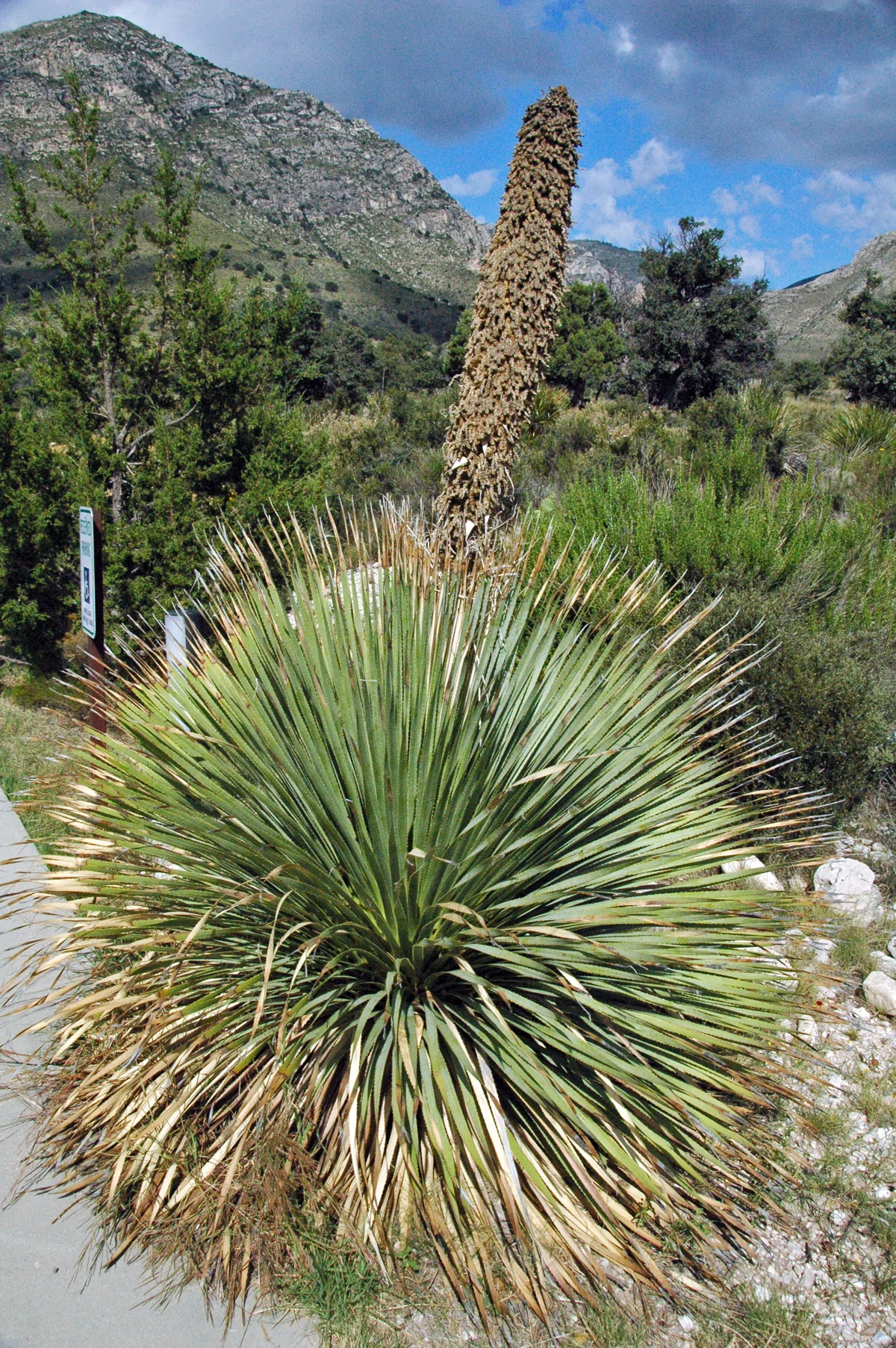
Photograph: James St. John / CC BY 2.0
Follow your eye upward
A flower tower.
Common sotol can send a stalk roughly 15 feet into the air. The upper portion carries thousands of tiny flowers. Those blooms attract visiting insects.
Bobby’s walking stick begins its story as a flowering stem, rather than a tree branch.
Look along the edge
Fine teeth. Big clue.
Long, narrow, blue-green leaves radiate from the plant. Small teeth line their edges. Look closely from a comfortable distance rather than running a hand along them.
The widened, spoon-shaped leaf base gives desert spoon its common name.
Start at ground level
A living fountain.
The rounded cluster of leaves is called a rosette. Common sotol is an evergreen member of the asparagus family. It is neither a cactus nor an agave.
The rosette keeps growing after flowering. A finished stalk doesn’t mean a finished plant.
One stalk. Several lives.
The story keeps growing.
Follow what happens before and after the stalk dries. These are life stages, not a fixed calendar: flowering varies with conditions.
Spring into summer
A busy stop for insects.
A flowering sotol can draw bees, flies, wasps, and butterflies. Individual plants produce either male or female flowers.
Pause nearby and count the different visitors you can see without disturbing them.
After pollination
Flowers make way for fruit.
Female plants can develop small, winged fruits containing seeds. The fruits dry as the season progresses.
The living rosette remains. Unlike many agaves, common sotol does not die after flowering.
After the flowers are gone
A stalk can become a home.
Native solitary bees can excavate nesting tunnels through the firm outside and into the softer interior of old sotol stalks.
A dry stem may still be doing useful work. Leave standing stalks in place and look for tiny entrance holes from a distance.
Read the landscape
Look beyond
the desert floor.
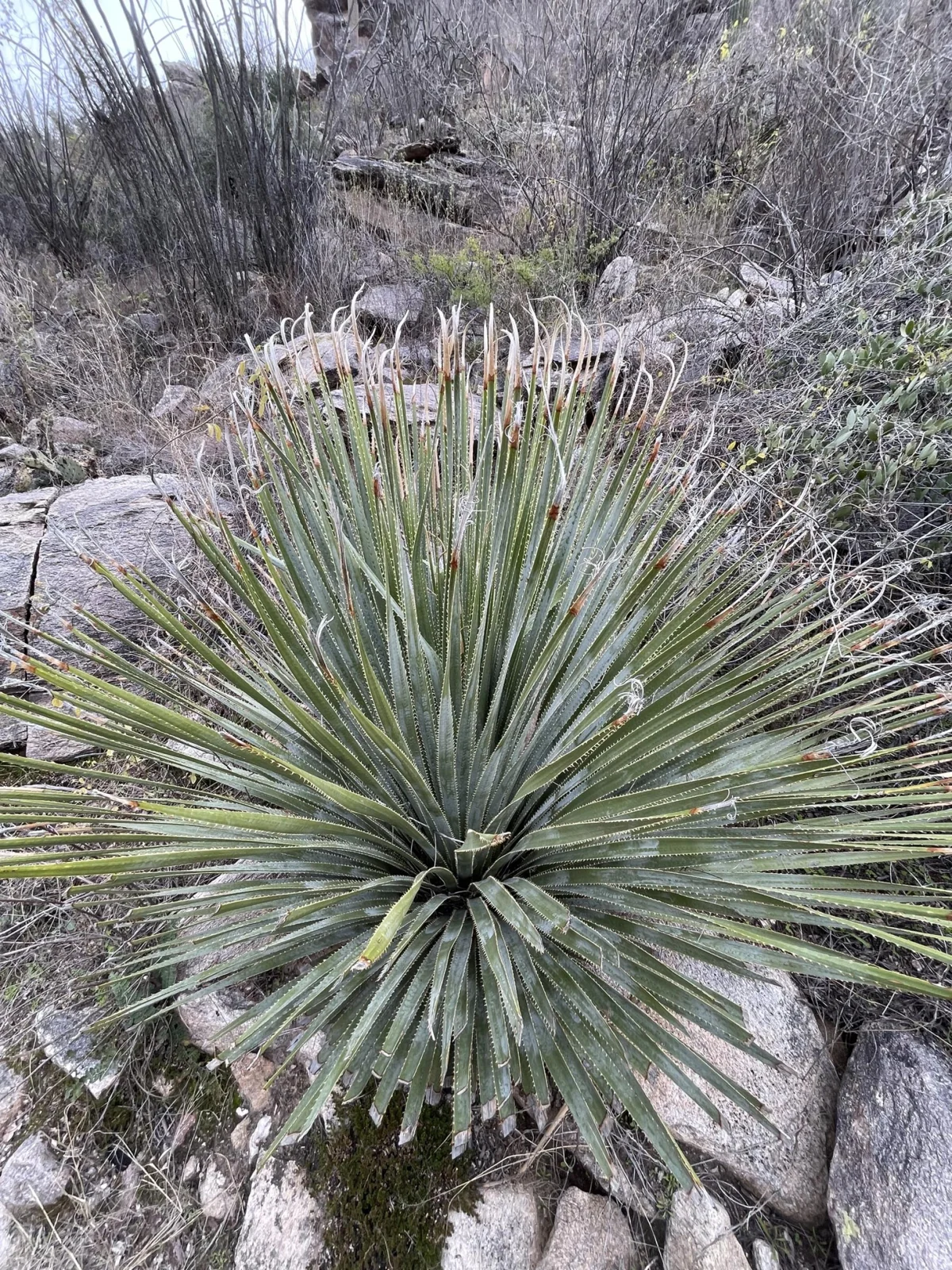
Common sotol grows on rocky slopes and foothills, from grasslands into oak and pine-oak country. In Arizona, it is associated especially with the southeastern part of the state.
Its broader native range extends into New Mexico, western Texas, and northern Mexico. The name “desert spoon” tells only part of its habitat story.
- A useful elevation clue
- 3,000–6,000 feet
People & the plant
Useful for generations.
Long before today’s trail walks, Indigenous communities used sotol’s tough leaf fibers. The Arizona-Sonora Desert Museum describes Tohono O’odham sleeping mats woven from leaves after their marginal teeth were removed.
Baskets, cordage, mats, and other fiber work are part of this plant’s human story. Bobby’s video offers another way to notice the materials in the landscape.
Take the observation home. Bring a walking stick you already own, photograph the plant, and leave wild stalks for their next chapter.
Put your field eye to work
What would you notice?
Four quick questions. Learn as you go, then earn your Sotol Field Note. No sign-up needed.
0 of 4 discoveries
Field note earned
You’ll see the stalk differently now.
Sotol observer · All four discoveries complete.
Your progress is saved in this browser.Your next walk
Make a field note
of your own.
Use this checklist when you’re out in suitable habitat. Observe from the trail and check off only what you actually see.
0 of 3 observations recorded
Saved on this device when browser storage is available.