
Arizona Field Guide 01 / Sonoran Desert
Meet the saguaro.
Carnegiea gigantea sah-WAHR-oh
Join Bobby Boido and Matthew Gast in the Sonoran Desert for a closer look at the cactus we pass all the time in Arizona.
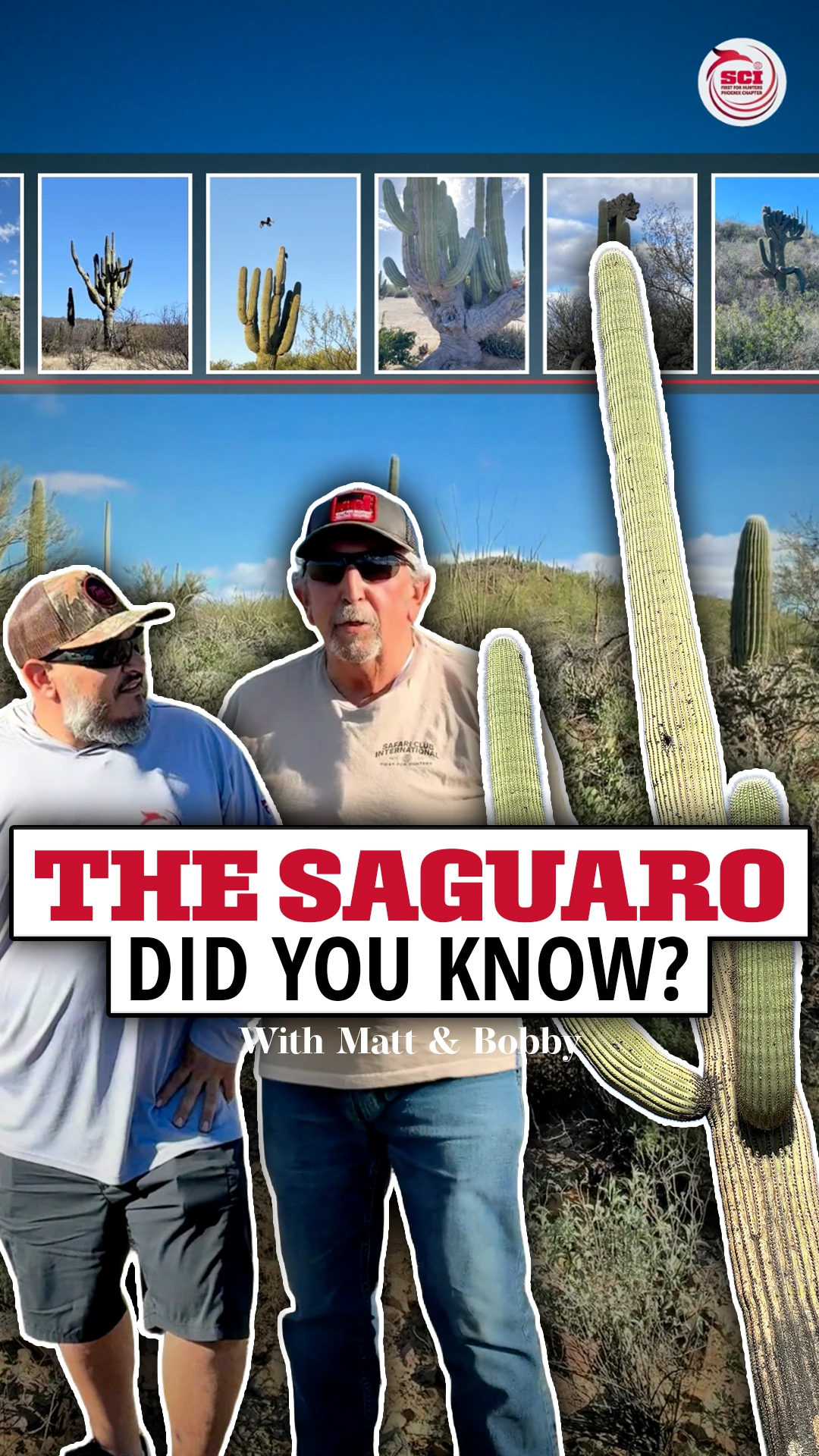 Play the field video
Close the field video

New field notes · With Bobby Boido
Nature’s walking stick: the sotol stalk
Meet the plant, explore its second life as bee habitat, and test your field eye.
Look closer
Inside a desert giant
Pick a number to see how that part of the saguaro helps it survive and supports its neighbors.
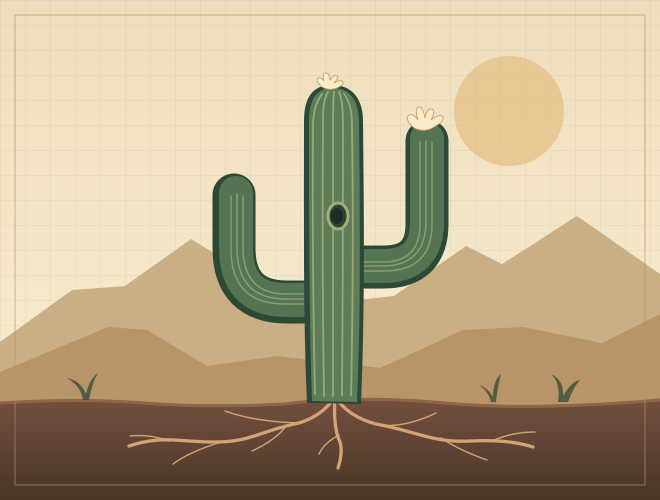
01 / Flowers
A night shift for pollinators
The saguaro’s white blossom is Arizona’s state flower. A flower opens in the evening and usually closes the next day. Bats can visit after dark, while bees and birds such as white-winged doves visit in daylight.
Pollinated flowers can become red fruit. Fruit-eating wildlife helps spread the seeds.
02 / Nest cavities
Who lives upstairs?
Gila woodpeckers and gilded flickers carve nest cavities into the stem. When the original birds leave, other wildlife, including elf owls, can use those cavities for shelter or nesting.
Look from a distance for a dark opening or a bird returning to it.
03 / Pleats and water
Built to expand
The folds in the stem spread as the plant stores water after rain and draw closer together as it uses that water. Underneath, woody ribs support the plant and can remain standing after it dies.
04 / Roots
Most of the action is near the surface
Many of the saguaro’s roots spread sideways just beneath the soil. They take up water from brief rains before it drains deeper. The plant stores it in its stem for dry spells.
The life cycle
A lifetime in four stages
From a few inches of growth to a cactus that can live more than 150 years. The ages are estimates. Rainfall, temperature, and soil all affect how fast a saguaro grows.
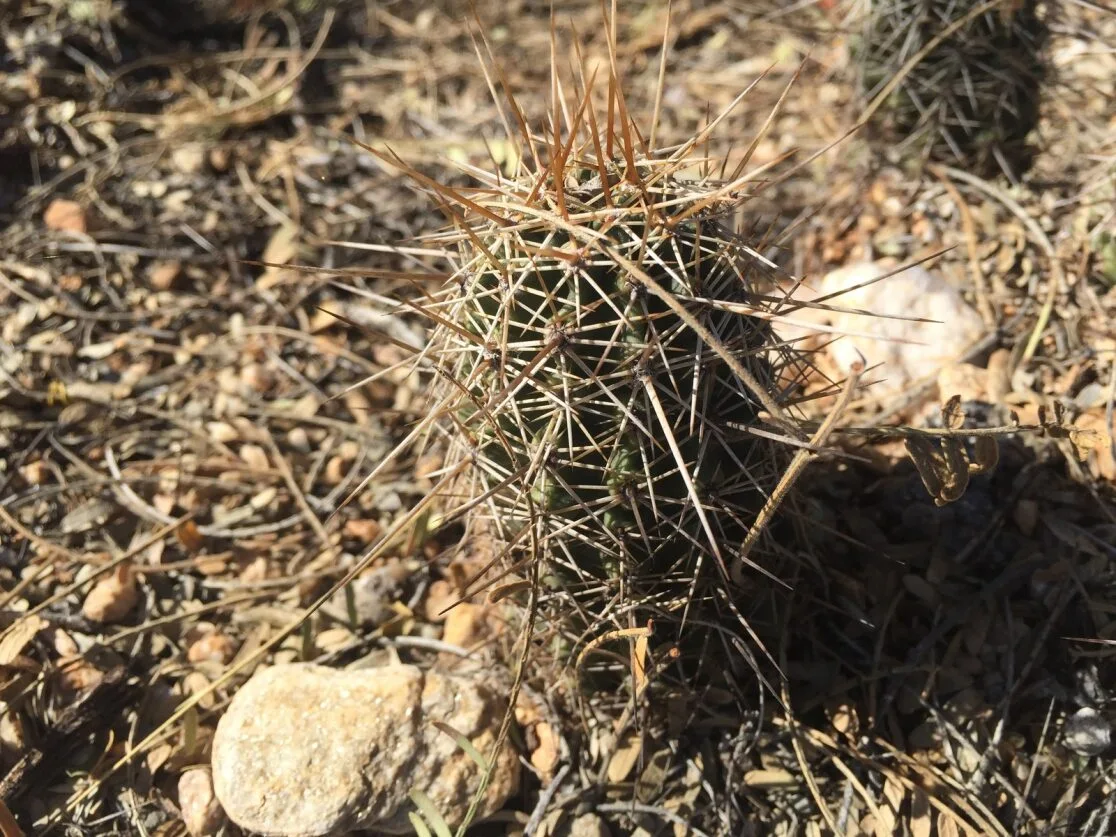
About 5–10 years
Small enough to miss
A nurse tree such as a palo verde can shield a young saguaro from intense heat and cold.
- Approximate height
- 1–3 inches
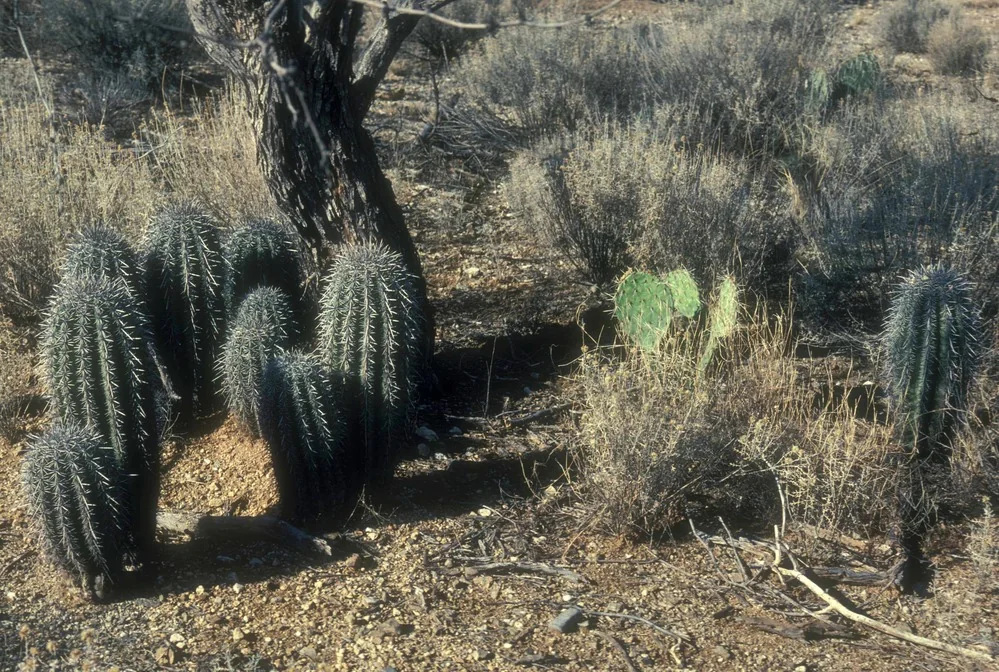
About 20–40 years
Decades in the making
A saguaro may be decades old before it reaches knee height. Look for a single upright column with deep pleats.
- Approximate height
- 2 feet
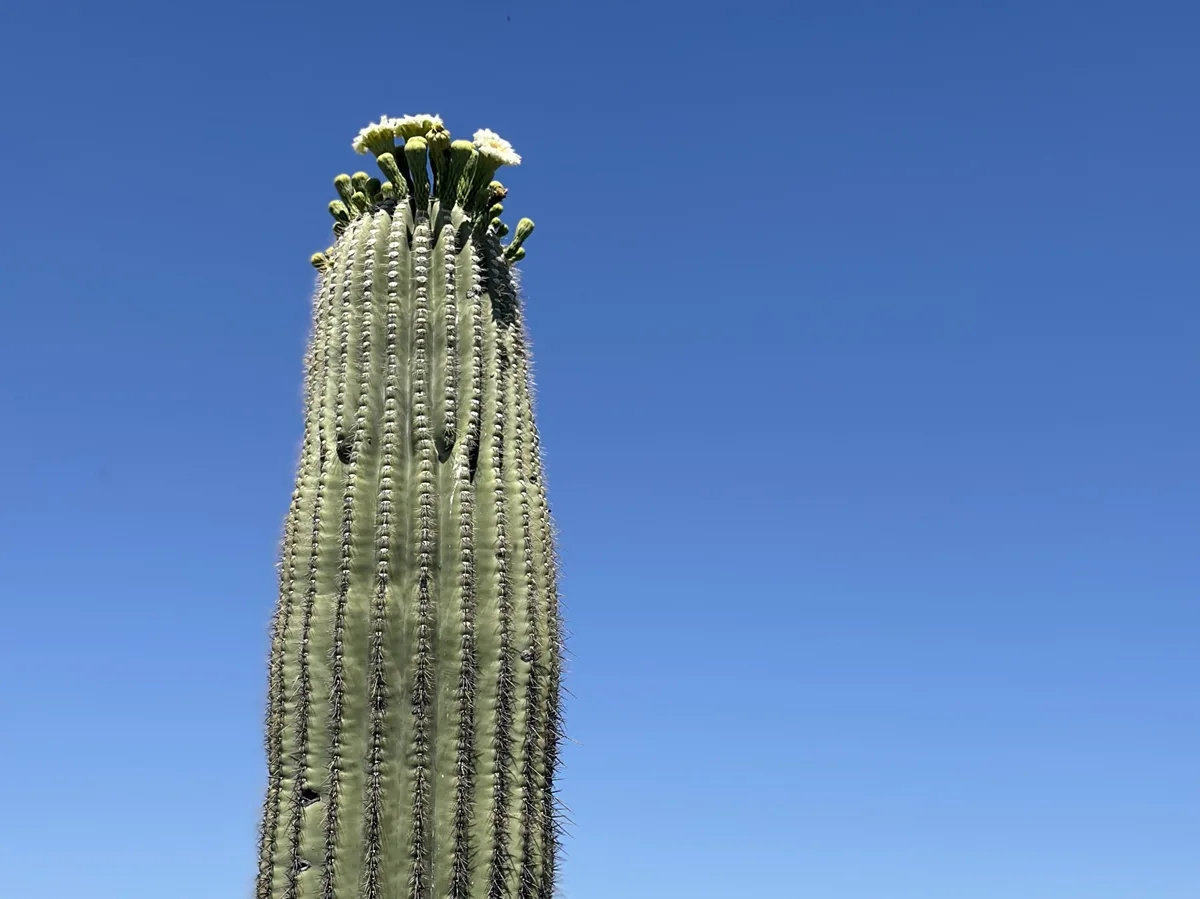
Roughly 35–70 years
The first blossoms
In Saguaro National Park, plants around this height can begin flowering. Each bloom gives pollinators about a day to visit.
- Approximate height
- 6–8 feet
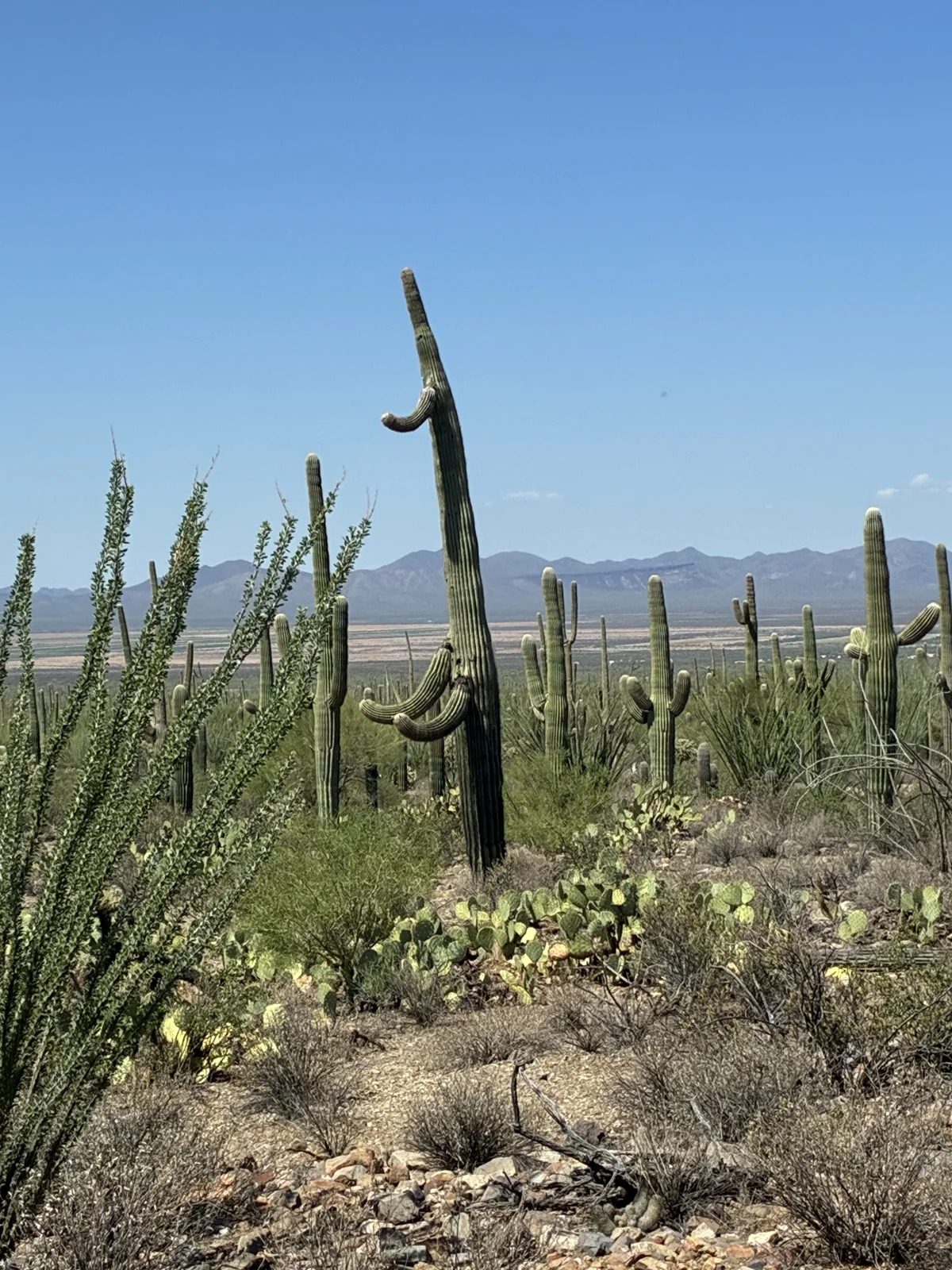
Maturity
Arms tell part of the story
Each arm can produce flowers and fruit. Some saguaros never branch, so counting arms won’t tell you a plant’s age.
- Possible lifespan
- 150+ years
From Bobby’s field photos
A closer look in the wild
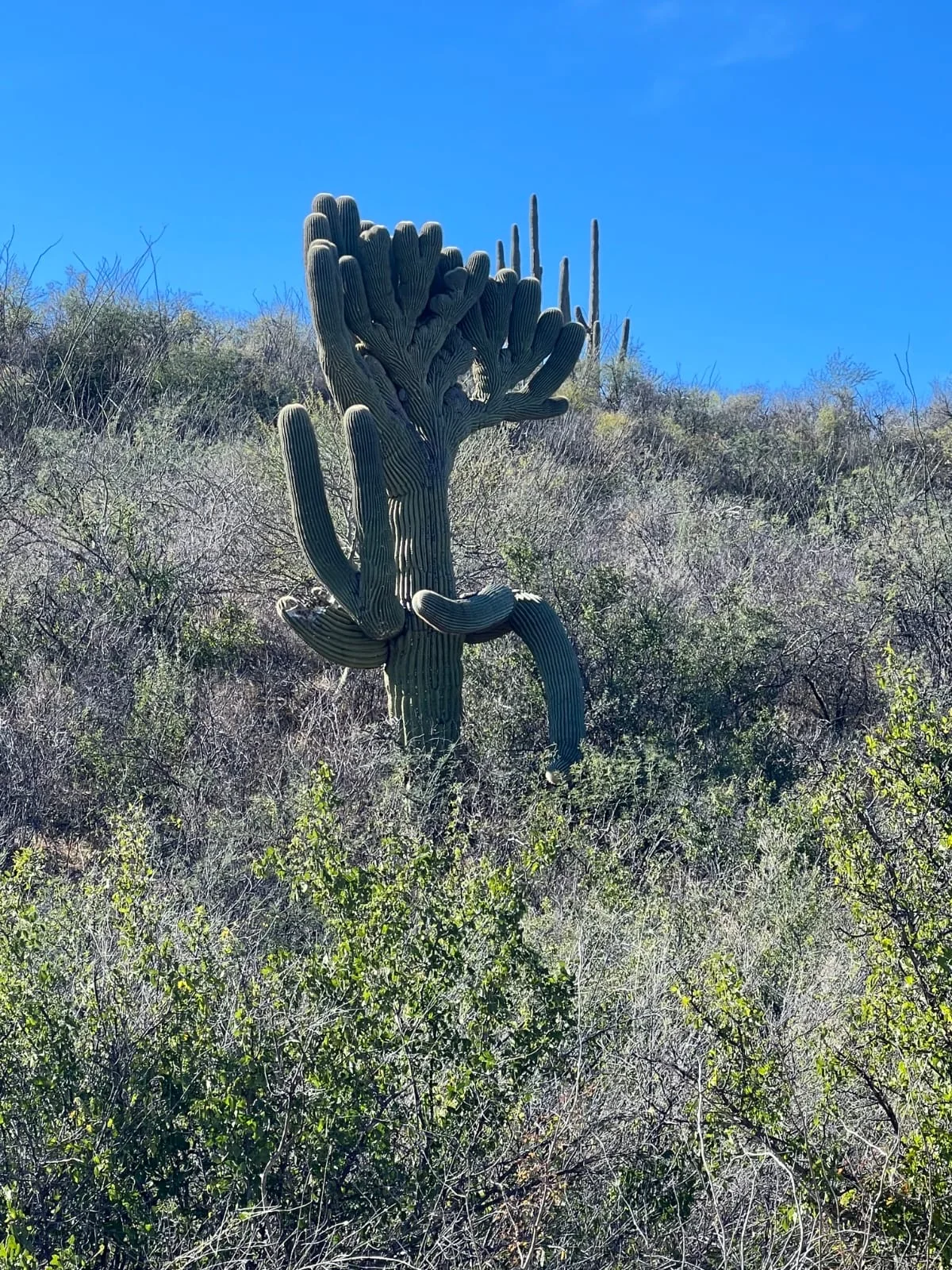
The crested saguaro
Sometimes a growing tip spreads into a fan of tightly folded pleats. This is called a crest, or cristate growth. Biologists are still unsure what causes it.
Read about crested saguaros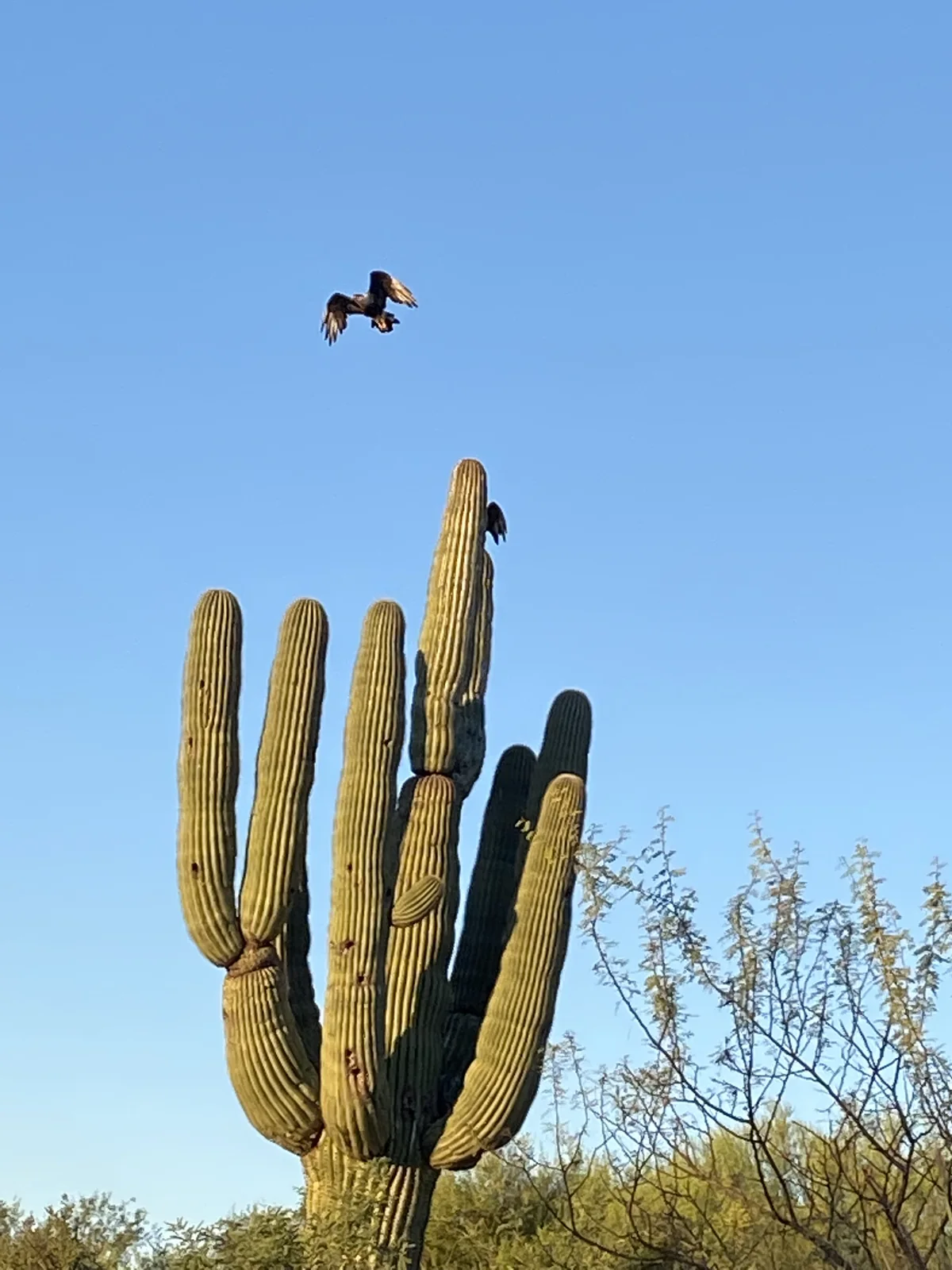
A perch above the desert
Birds can use tall saguaros as perches, and some nest in or on them. When you spot a cactus like this one, pause and watch what comes and goes from its branches.
Read the landscape
Home in the Sonoran Desert
Wild saguaros grow in the Sonoran Desert, including parts of Arizona, southeastern California, and Mexico. Around Phoenix, look for their tall silhouettes on rocky foothills and across desert flats.
Try it outside: On your next desert walk, count how many different birds visit a saguaro in five minutes. Bring binoculars and watch from the trail.
- Late springLook for white blooms near the tops of stems and arms.
- Early summerLook for ripening red fruit and birds visiting for a meal.
- After rainNotice how the stem’s pleats spread as the cactus takes up water.
Field check
Earn your saguaro stamp
Answer all three questions to earn the first Arizona Field Guide stamp.
0 of 3 correct
Field Stamp 01 earned Saguaro Explorer